Un compañero en la mesa para hacer el día por cuenta propia.
A companion on the table for doing the day on your own.
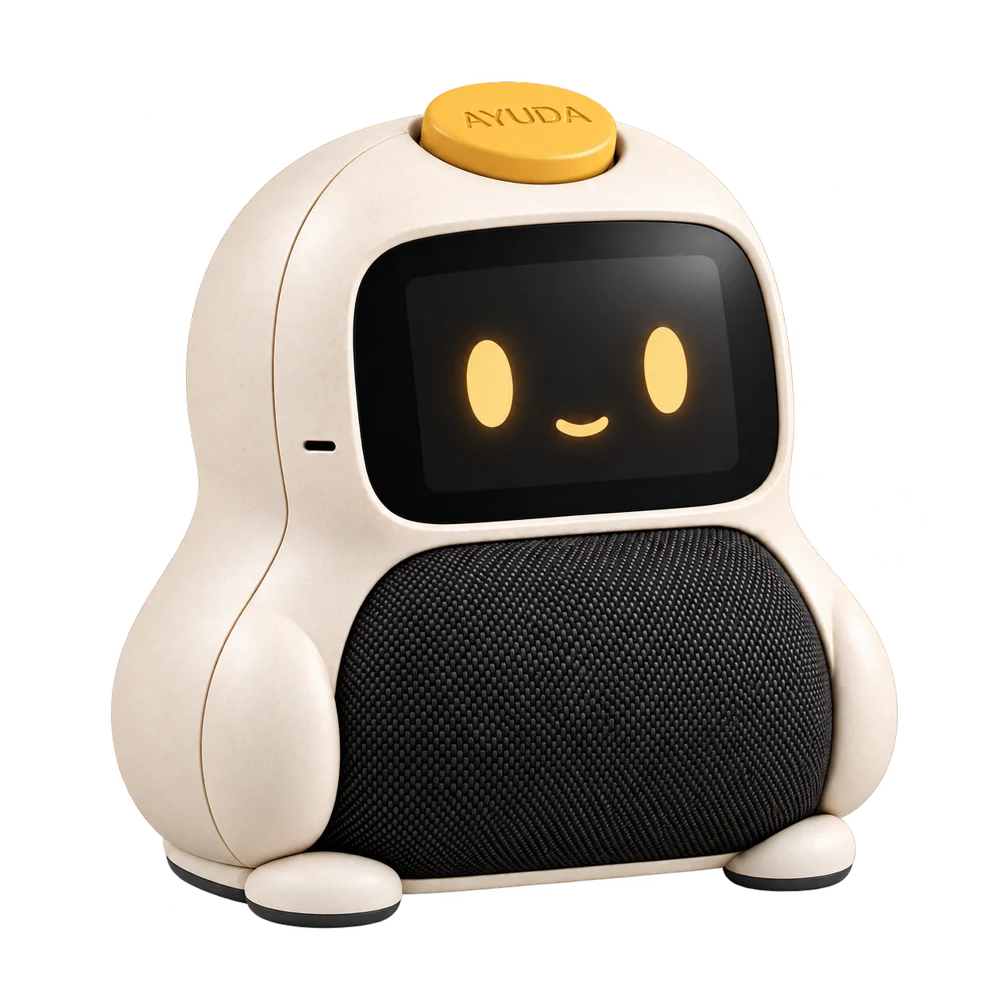
Chato es un dispositivo con cara, voz y un botón de ayuda, para adultos con discapacidad intelectual que viven con apoyos. Conversa, acompaña una actividad paso a paso y, cuando hace falta, avisa a una persona de confianza.
Chato is a device with a face, a voice and one help button, for adults with intellectual disabilities who live with support. It talks, walks through an activity one step at a time and, when needed, lets a trusted person know.
En diseño.In design. Todavía no hay prototipo físico ni personas usándolo.There is no physical prototype yet, and nobody is using it.
Probá decirle que no.
Try telling it no.
Lo que distingue a Chato es cómo se comporta. Respondé como respondería la persona y mirá qué hace. Es una simulación en esta página: todavía no es el producto funcionando.
What sets Chato apart is how it behaves. Answer the way the person would and watch what it does. This is a simulation on this page: it is not the product running yet.
HablaSpeaking
La pantalla de 3,5 pulgadas, dibujada. Cada estado se lee con una palabra además del gesto.The 3.5-inch screen, drawn. Every state reads as a word as well as an expression.
Chato: Hoy vas al taller después del desayuno. ¿Querés preparar la mochila ahora?Today you go to the workshop after breakfast. Do you want to pack your backpack now?
HoyToday
- DesayunoBreakfasthechodone
- MochilaBackpackahoranow
- TallerWorkshop9:30
Marta es un nombre de ejemplo: sería su persona de apoyo.Marta is a sample name: she would be the support person.
- Chato: «Hoy vas al taller después del desayuno. ¿Querés preparar la mochila ahora?»“Today you go to the workshop after breakfast. Do you want to pack your backpack now?”
- La persona:The person: «Dale.» También puede decir «después» o «no». Si dice que no, Chato responde «Está bien. Paramos», no vuelve a ofrecerlo y no le avisa a nadie.“OK.” They can also say “later” or “no”. If they say no, Chato answers “All right. We stop”, does not offer again and tells nobody.
- Chato: «Buscá tu botella.» Una idea por turno, con la foto de su propia botella.“Find your bottle.” One idea per turn, with a photo of their own bottle.
- La persona:The person: «No la encuentro.»“I can't find it.”
- Chato: «Fijate en la mesada de la cocina.» La pista la cargó su persona de apoyo. Chato no inventa dónde está.“Look on the kitchen counter.” The hint was added by their support person. Chato does not make up where it is.
- Chato: «Listo, ya está la botella. ¿Seguimos?»“Done, the bottle is in. Shall we go on?”
La ayuda de todos los días depende de que alguien esté.
Everyday help depends on someone being there.
- Una app espera que la abras.An app waits to be opened.
- Hay que acordarse, desbloquear, encontrarla y leer. Para muchos adultos con discapacidad intelectual, la ayuda se corta en alguno de esos pasos.You have to remember, unlock, find it and read. For many adults with intellectual disabilities, the help breaks at one of those steps.
- El recordatorio termina siendo una persona.The reminder ends up being a person.
- La mochila, las llaves, el horario del taller. Alguien de la familia o del equipo de apoyo lo repite todos los días.The backpack, the keys, the workshop schedule. Someone in the family or the support team repeats it every day.
- «¿Qué pasa cuando no estemos?»“What happens when we are gone?”
- Es la pregunta de muchas familias a medida que los padres envejecen. Cada cosa que la persona aprende a hacer sola cambia esa respuesta.Many families ask it as parents grow older. Every single thing the person learns to do alone changes the answer.
Son hipótesis. Todavía no las observamos en casas reales, y seguimos buscando cuál es el problema exacto que vale la pena resolver primero.
These are hypotheses. We have not observed them in real homes yet, and we are still working out which exact problem is worth solving first.
Adultos en camino a una vida más independiente.
Adults on their way to a more independent life.
Personas de 18 a 40 años con discapacidad intelectual leve o moderada, por ejemplo con síndrome de Down. Viven con su familia, en una vivienda con apoyo o solas con visitas.
People aged 18 to 40 with mild or moderate intellectual disabilities, for example with Down syndrome. They live with family, in supported housing, or alone with visits.
- La personaThe person
- Hacer sus cosas sin que la controlen.Doing their own things without being monitored. Conversación a su ritmo, su día a la vista y una guía paso a paso cuando la pide.Conversation at their own pace, their day in view and step-by-step guidance when they ask for it.
- La familiaThe family
- Saber que está bien.Knowing they are all right. Deja de ser el recordatorio de todos los días. Recibe un aviso cuando hace falta, y nunca un informe de lo que pasó.They stop being the daily reminder. They get a notice when it matters, and never a report of what happened.
- El equipo de apoyoThe support team
- Acompañar bien a más personas.Supporting more people well. Arma las rutinas con la persona, ve qué logra sola y decide cuándo retirar una guía.They set up routines with the person, see what they manage alone and decide when to take a guide away.
Por qué un objeto y no una app.
Why an object and not an app.
No hay que desbloquearlo ni acordarse de abrirlo. Está siempre en el mismo lugar, habla primero y tiene un botón que se encuentra con la mano. Que eso supere a una tablet es lo que tenemos que demostrar.
There is nothing to unlock and nothing to remember to open. It is always in the same place, it speaks first, and it has a button the hand can find. Whether that beats a tablet is what we have to prove.
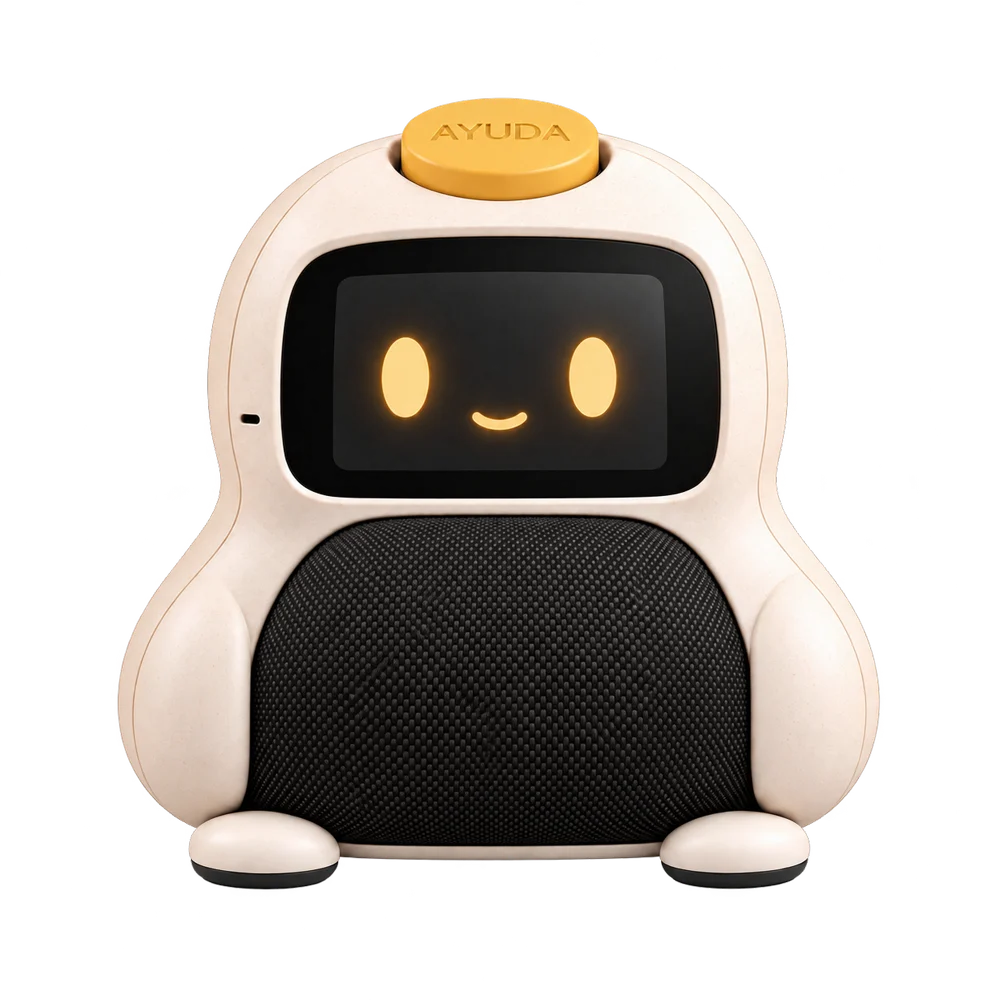
- Un botón que solo pide ayudaA button that only asks for help
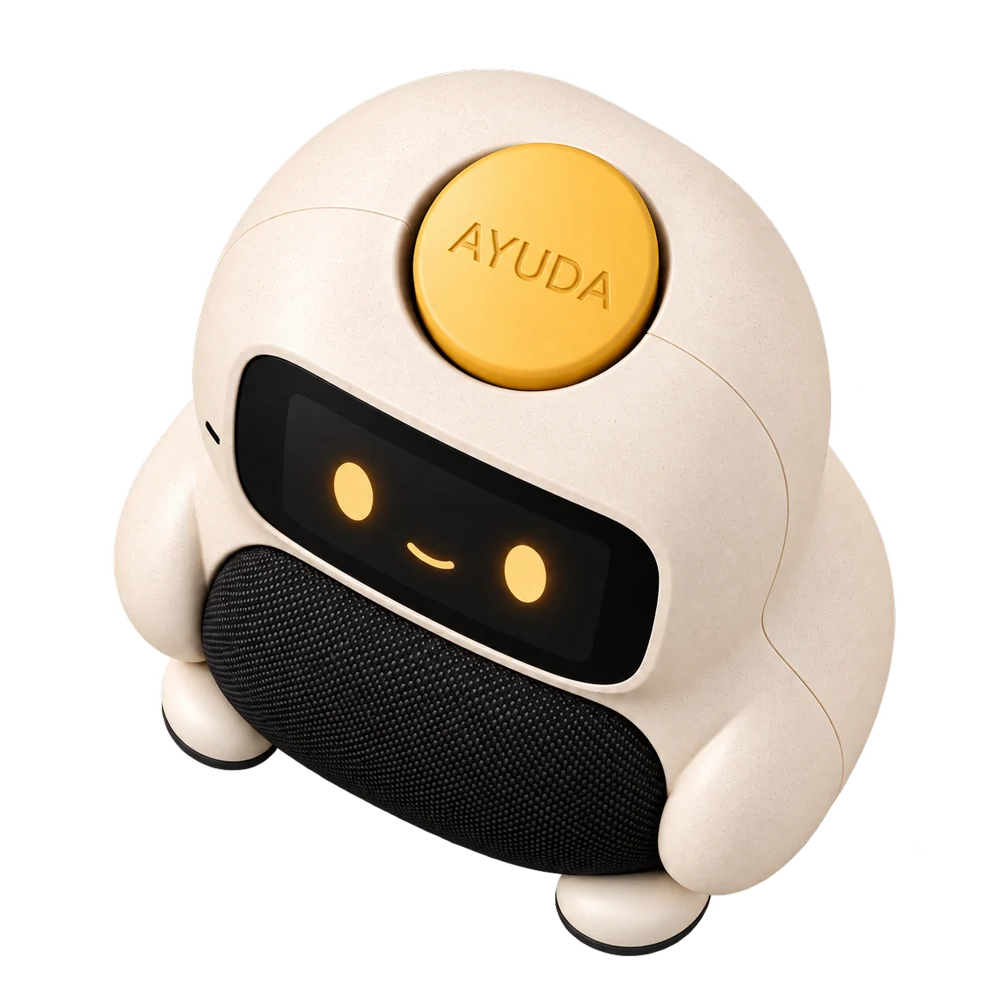
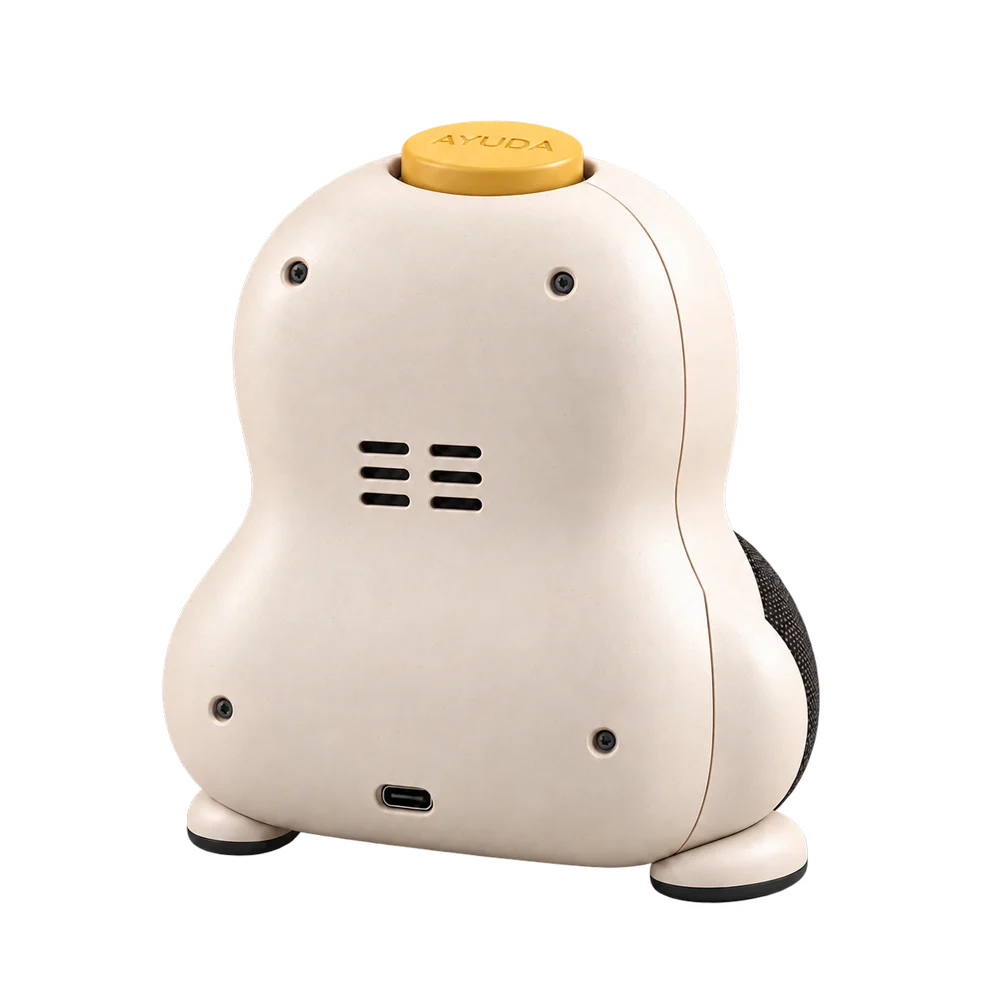
- Amarillo, grande y arriba de todo. Se encuentra sin mirar, también de noche. Se mantiene apretado, y la pantalla dice a quién se avisó y si el aviso llegó.Yellow, large and right on top. The hand finds it without looking, at night too. You hold it down, and the screen says who was notified and whether the notice arrived.
- Una cara de 3,5 pulgadasA 3.5-inch face
- Muestra si está escuchando, pensando o hablando. Cuando ayuda, cambia por una foto o por dos botones grandes.It shows whether it is listening, thinking or speaking. When it helps, it switches to a photo or to two large buttons.
- Una panza de telaA fabric belly
- Adentro va el parlante. El material es cálido y el objeto no parece un aparato médico.The speaker sits inside. The material is warm and the object does not look like a medical device.
- Sin cámaraNo camera
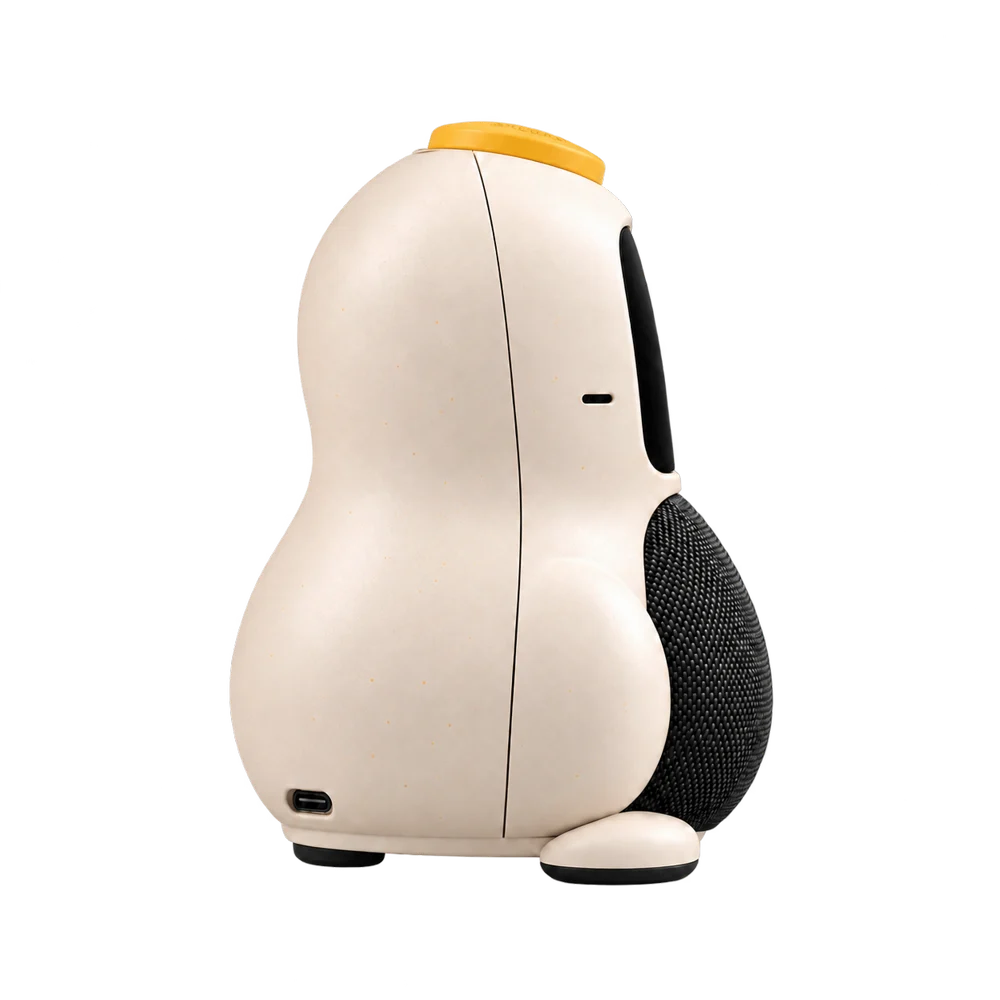
- El prototipo no lleva cámara ni batería. Va enchufado, sobre una mesa.The prototype has no camera and no battery. It stays plugged in, on a table.
Lo que existe hoy: el modelo CADWhat exists today: the CAD model
La carcasa está modelada pieza por pieza a partir de las medidas publicadas de la placa: 15 piezas para imprimir, verificadas como sólidos cerrados y sin interferencias entre sí. Falta medir los componentes reales, imprimir y probar el encastre.
The enclosure is modelled part by part from the board's published dimensions: 15 printable parts, checked as closed solids with no interference between them. Still to do: measure the real components, print, and test the fit.
- TamañoSize
- 150 × 185 × 110 mm
- PantallaScreen
- Táctil, 3,5″Touch, 3.5″
- PlacaBoard
- ESP32-S3 con micrófono y parlanteESP32-S3 with microphone and speaker
- CarcasaEnclosure
- 15 piezas impresas en PETG15 parts printed in PETG
- AlimentaciónPower
- USB-C, sin bateríaUSB-C, no battery
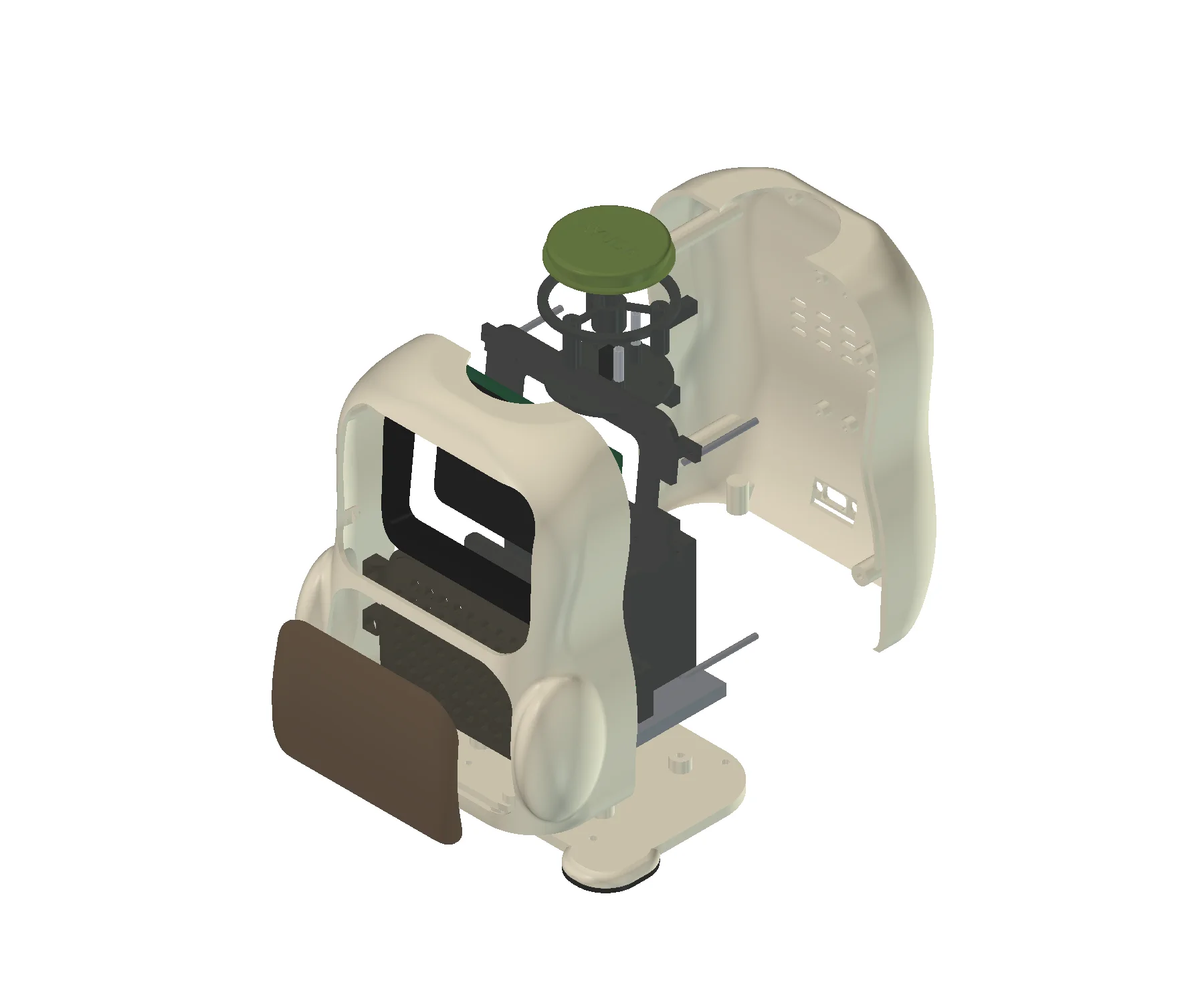
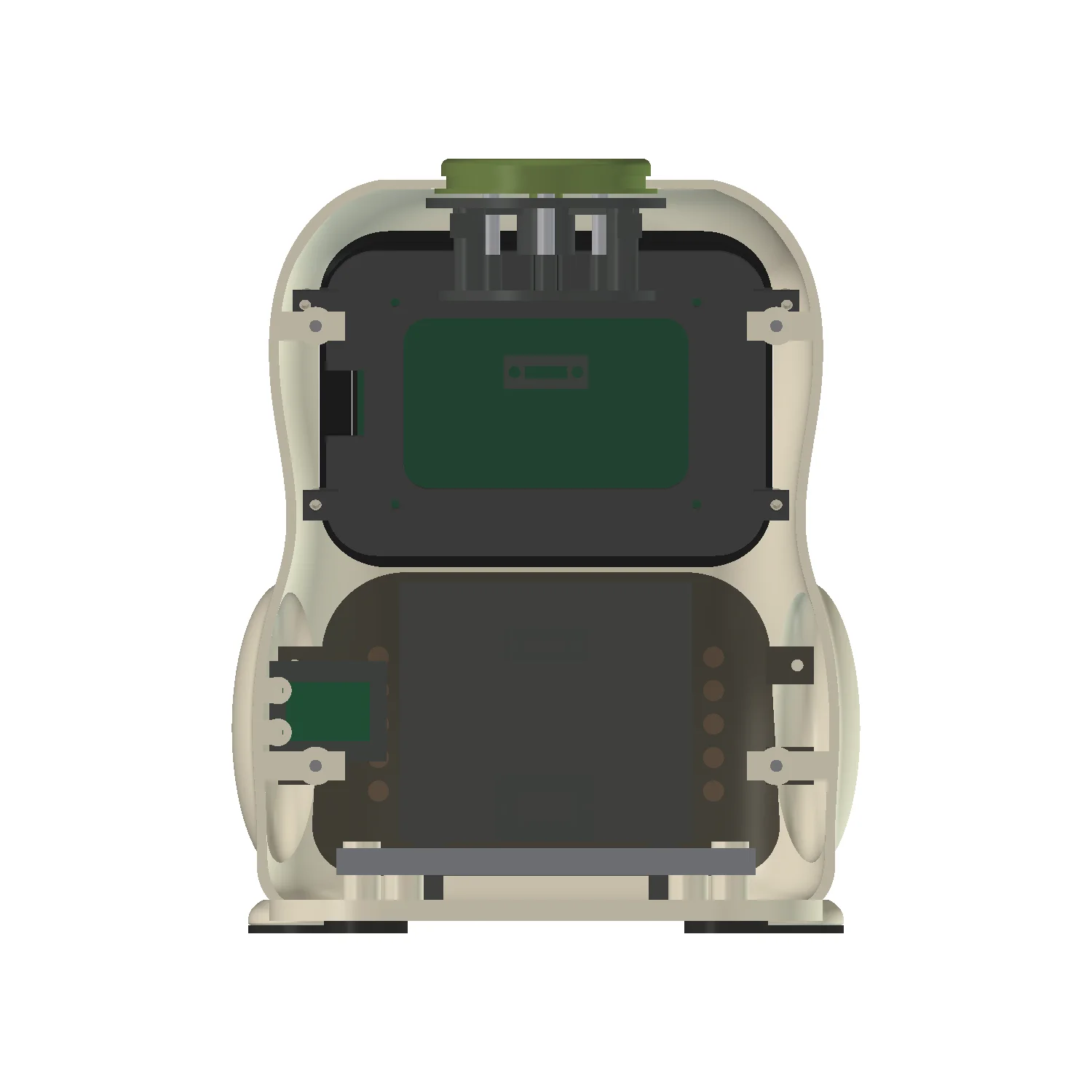
Las fotos del objeto en esta página son imágenes generadas a partir del diseño, que todavía no está cerrado: los colores pueden cambiar y el objeto no se fabricó. Las dos capturas del CAD son reales y todavía muestran el botón en su color anterior.
The photos of the object on this page are images generated from the design, which is not final yet: colours may change and the object has not been built. The two CAD captures are real and still show the button in its earlier colour.
Siete reglas que decidimos antes de construir.
Seven rules we set before building.
Habla como a un adultoIt speaks as to an adult
Tono cálido, lenguaje concreto y ninguna voz infantil.
Warm tone, concrete language and no childish voice.
No finge ser una personaIt does not pretend to be a person
No simula emociones ni busca que la persona dependa de él.
It does not simulate emotions or try to make the person depend on it.
La conversación es privadaThe conversation is private
La familia no recibe transcripciones. La persona decide qué se comparte.
The family gets no transcripts. The person decides what is shared.
Los avisos los deciden reglas, no un modeloRules decide alerts, not a model
Cuándo y a quién se avisa está escrito de antemano. La inteligencia artificial conversa; no decide una alerta.
When and whom to notify is written in advance. The AI holds the conversation; it does not decide an alert.
La ayuda nunca depende del pagoHelp never depends on payment
El botón funciona aunque nadie esté pagando la suscripción.
The button works even if nobody is paying the subscription.
Nunca un ladrilloNever a brick
Sin internet conserva la hora y la agenda. Si el proyecto termina, publicamos el firmware y un servidor mínimo.
Without internet it keeps the time and the schedule. If the project ends, we publish the firmware and a minimal server.
No diagnostica ni vigilaIt does not diagnose or watch
No reemplaza a la persona de apoyo y no hace promesas médicas.
It does not replace the support person and makes no medical promises.
Un dispositivo, un servicio y una app.
A device, a service and an app.
El dispositivo, en la mesaThe device, on the table
Dibuja la cara, escucha, lee la pantalla táctil y el botón. Su firmware guarda lo mínimo para funcionar sin conexión.
It draws the face, listens, and reads the touchscreen and the button. Its firmware keeps the minimum needed to work offline.
El servicioThe service
La voz, la memoria de cada persona, las rutinas y las reglas de aviso. El diseño usa modelos Claude: uno rápido para conversar y uno más capaz para rutinas y resúmenes.
Voice, each person's memory, routines and the alert rules. The design uses Claude models: a fast one for conversation and a more capable one for routines and summaries.
La app, para el círculo de apoyoThe app, for the support circle
En la web y en el celular. La familia y el orientador cargan rutinas y fotos junto con la persona, y reciben los avisos. La persona no necesita usarla.
On the web and on the phone. Family and the support worker add routines and photos together with the person, and receive the notices. The person does not need to use it.
Cómo se pagaría: equipo comprado y una cuota mensual.How it would be paid for: a purchased device and a monthly fee. El equipo es de quien lo compra y conserva un modo básico sin pagar. La cuota cubre la conversación, los cambios desde la app y el soporte.The device belongs to whoever buys it and keeps a basic mode without paying. The fee covers conversation, changes from the app and support.
- EquipoDevice
- US$ 150–200
- CuotaFee
- US$ 20–30 por mesper month
Es el rango que vamos a probar. Nadie lo pagó todavía.This is the range we will test. Nobody has paid it yet.
Dónde estamos.
Where we are.
HechoDone
- Elegimos el público después de evaluar y descartar otros.We chose the audience after weighing and ruling out others.
- Diseñamos el producto: funciones, reglas de conversación y modelo de negocio.We designed the product: features, conversation rules and business model.
- Modelamos la carcasa en CAD. Va por la tercera revisión.We modelled the enclosure in CAD. It is on its third revision.
- Armamos en software un recorrido de práctica de una actividad, con datos ficticios.We built a practice run of one activity in software, with fictional data.
Lo que sigueNext
- Medir los componentes reales e imprimir muestras de encastre.Measure the real components and print fit samples.
- Armar tres unidades.Build three units.
- Probar en mesa la voz en español: turnos, pausas y latencia.Bench-test voice in Spanish: turn-taking, pauses and latency.
DespuésAfter that
- Conversar con instituciones y familias de Bahía Blanca.Talk with institutions and families in Bahía Blanca, Argentina.
- Una prueba en casas, de unas cuatro semanas.A trial in homes, about four weeks long.
- Comparar contra una tablet bien configurada.Compare against a well-configured tablet.
Qué nos haría replantear el proyecto:What would make us rethink the project: que una tablet resuelva lo mismo, o que las familias no pagarían por él.a tablet solving the same thing, or families not being willing to pay for it.
Quién lo hace.
Who is building it.
Francisco Clarke
Fundador. Software engineer, de Argentina.Founder. Software engineer, from Argentina.
Ver su perfil en LinkedInSee his LinkedIn profileEscribinos.
Write to us.
Lo estamos construyendo a la vista. Si convivís o trabajás con personas con discapacidad intelectual, o si evaluás proyectos, queremos escucharte.
We are building this in the open. If you live or work with people with intellectual disabilities, or if you evaluate projects, we want to hear from you.